
A home’s kitchen and bathrooms are easy to notice during a tour. The underground pipe carrying wastewater away from the building is less visible, but it can be an important part of the purchase investigation. A sink draining normally during a short visit does not provide the same information as a professional review of the property’s private sewer lateral.
For buyers in Laguna Beach, the first useful question is which agency serves the address. The city’s utility information distinguishes its sewer service area from South Laguna, which is served by South Coast Water District. That difference is a reason to verify the actual provider and applicable requirements before applying a rule or program found on a general web search.
Identify the Laguna Beach property’s sewer connection
Ask the seller and transaction team for available service information, prior inspection records, and a description of the connection. Confirm the provider using the address. A mailing address or neighborhood label can help orient the search, but the responsible agency should confirm questions about service and requirements.
A private sewer lateral connects the building’s wastewater system to the public sewer. The City of Laguna Beach states that owners within its system are responsible for inspection and maintenance of the private lateral, including the connection to the public sewer. This responsibility can extend beyond the visible boundaries of a yard.
Ask the appropriate agency and qualified plumber to explain the arrangement for the property you are considering. If the home is part of a condominium or another shared development, also review the governing documents and maintenance allocation. A shared physical component does not, by itself, explain who must arrange or pay for work.
Separate the public main from the private line
Use a simple description or professional diagram to understand which part of the system is being discussed. A repair to the city’s main and a repair to a private lateral are different projects. Knowing the location and responsibility helps prevent a reassuring statement about one from being mistaken for information about the other.
If records are unclear, ask what documentation can establish the connection and maintenance responsibility. Avoid relying solely on where a cleanout appears in the yard. The visible access point is useful, but it does not explain every underground route, shared arrangement, or property-rights issue.
Collect the available inspection and maintenance history
Request prior camera inspection reports, videos, repair descriptions, permits where applicable, invoices, and any agency correspondence. Organize them by date and property address. A report from a neighboring property or a short invoice without a location may not answer your question about this line.
Ask what prompted earlier work. Routine maintenance, a blockage, a leak, and a planned replacement involve different circumstances. Understanding the reason for a service call can help a professional interpret the record and decide whether additional evaluation is appropriate.
Read the scope carefully. A document may describe cleaning, inspection of only part of the line, a localized repair, or replacement of a larger section. The phrase sewer work completed is too broad to establish which of those occurred. Request clarification from the professional who performed the work when practical.
Keep the limits of older information visible. A previous inspection describes conditions at that time and within its scope. It can be valuable history without proving the current condition of every part of the lateral. Ask the qualified professional how the age and completeness of the record affect the present review.
Arrange the right professional evaluation
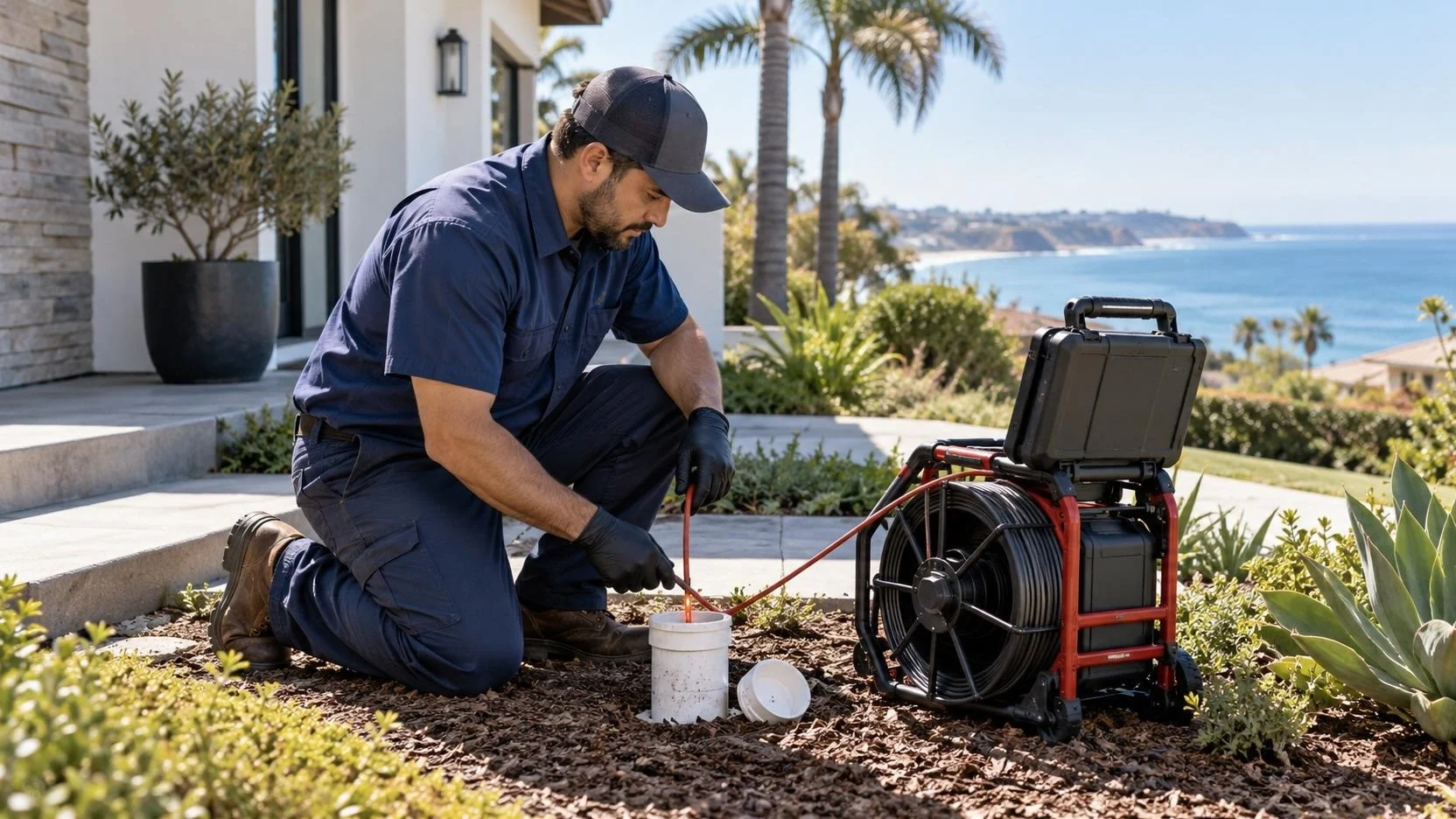
Discuss a sewer-lateral review with the home inspector and your agent early enough to coordinate access. Ask a qualified plumber what inspection is appropriate and what the service will deliver. The city’s guidance identifies video inspection as a way to evaluate the full private lateral rather than relying on surface observations.
Before scheduling, ask whether an accessible cleanout is needed, whether the seller must authorize any preparation, and what could prevent a complete inspection. Clarify whether cleaning or other work is a separate service. A buyer should understand the proposed process before agreeing to costs or expecting a definitive result.
Use Clara’s buyer’s guide as a starting point for the broader investigation. A specialized sewer appointment can then be coordinated with other property reviews instead of appearing as an unexpected task near the end of escrow.
Verify the professional’s relevant licensing and qualifications through appropriate channels. The city’s list of pre-certified plumbers is provided as a resource, not a guarantee of a particular company’s work. Ask about experience, scope, documentation, and responsibility for any follow-up needed.
Ask what a complete report should show
A useful report should identify the property, inspection date, portions evaluated, findings, and limitations. Ask for an explanation of where significant observations occurred and what they mean. A video file without context may be difficult for a buyer to interpret accurately.
When an agency requires a formal submission, confirm the applicable format and process with that agency and the professional. The City of Laguna Beach has specific reporting requirements for its program. A private inspection arranged for your purchase may need to be evaluated separately against any applicable agency requirements.
Understand findings before deciding on a response
Ask the plumber to explain observations in plain language. Roots, damaged joints, deposits, or another finding can have different implications depending on their location and severity. Your role is to understand the professional’s conclusion and recommended next step, not to diagnose the line from a single video frame.
Separate an immediate functional problem from a maintenance recommendation or an area that could not be fully evaluated. A report may contain all three. Keeping those categories distinct helps you decide what information is needed before purchase and what could become an ordinary ownership task.
If the camera could not reach the full line, ask why and what would be required to complete the review. An obstruction, access limitation, or equipment issue should remain identified as a limitation. It should not silently become a statement that the unobserved section is in good condition.
For a significant finding, consider whether another qualified opinion would help clarify the scope before a repair decision. Provide the complete existing report so the next professional understands the question. Comparing conclusions is more useful when everyone evaluates the same portion of the system and explains any differences.
Compare repair proposals on the same basis
If work is recommended, request a written scope that identifies the affected section and proposed method. Ask what is included in access, preparation, permits, inspection, cleanup, and restoration of disturbed areas. A price should be connected to a defined task rather than treated as a complete answer by itself.
Discuss how the work relates to the public right-of-way, neighboring property, or common areas if those locations are involved. The appropriate agency and professionals should explain required permissions and responsibilities. A convenient route for equipment does not automatically establish a right to use it.
Ask about scheduling, material availability, and the practical effect on use of the home. If wastewater service must be interrupted, understand the expected arrangement and any limitations. These details may affect a move-in plan even when the repair cost appears manageable.
Review available incentives only after confirming eligibility and current program conditions. Do not subtract an anticipated reimbursement from your budget until the responsible agency explains the requirements and authorization process. Funding availability and qualifying work can differ, and work performed too early may not qualify.
Keep contract decisions separate from technical findings
Share the report with your agent and identify the questions that matter to your purchase. The technical recommendation, the seller’s response, lender requirements, and your contractual options are separate parts of the decision. One does not automatically settle the others.
If the parties discuss repairs or another arrangement, make the terms clear through the proper transaction documents. Identify what work is intended, who will arrange it, and what records will establish completion. Ask the relevant professionals how any remaining condition should be handled before closing.
A credit may change the amount of money involved without resolving the underlying condition or obtaining necessary approvals. Review the practical consequences of taking responsibility for later work, including timing and uncertainty. Financing and legal questions should be directed to the professionals responsible for those areas.
Maintain the actual investigation calendar. Waiting for another video or estimate does not automatically extend a deadline. If additional time or a change in terms is needed, your agent can help coordinate the appropriate process while legal counsel addresses questions about rights and obligations.
Organize unresolved findings by the decision they affect
Suppose a camera inspection reaches an obstruction before the technician can evaluate the remaining line. The report may accurately describe what was visible while leaving part of the system unassessed. Ask what additional authorized work would be needed to complete the investigation and what that would cost. Do not describe the unseen portion as either sound or defective without evidence.
Separate that technical question from the purchase discussion. Your agent can help communicate the outstanding information and review the contract with you, while the qualified professional explains the inspection limits. A proposed credit does not supply the missing condition information, and a complete report does not automatically decide what a seller must contribute.
Keep a dated list of the decisions still pending, including who is expected to answer each one. This makes it easier to see whether a new invoice or inspection has resolved the issue before the next contractual decision. It also preserves a useful record if the buyer proceeds with a clearly understood maintenance responsibility.
Carry the sewer information into homeownership
Before closing, organize the final report, video, work records, permits, and agency correspondence. Make a short index identifying the service provider, access information, and any professional maintenance recommendations. Keep the original documents available for future evaluation.
Ask the plumber for care guidance appropriate to the line and property. The city emphasizes avoiding items and materials that can contribute to blockages, including wipes and fats, oils, and grease. Follow current utility and professional instructions rather than using an improvised maintenance method.
Reviewing a sewer lateral before buying in Laguna Beach is a practical way to investigate a component that ordinary home tours cannot reveal. Confirm the provider, understand the inspection’s scope, and connect the findings with a realistic ownership plan. The result should be a documented decision about the actual system serving the home.
Frequently asked questions
Does every Laguna Beach address use the city’s sewer service?
No. The city’s utility information identifies South Coast Water District as the sewer provider for South Laguna. Verify service for the specific address.
Does a normal drain during a showing prove the lateral is sound?
No. A brief observation does not replace an appropriate professional evaluation of the private line.
Does a past cleaning invoice mean the whole lateral was replaced?
No. Review the written scope and supporting records to understand exactly what work occurred.
Contact Clara Blunk
Buying a home in Laguna Beach? Contact Clara Blunk at (949) 998-4866 to coordinate your property investigation and purchase timeline. Clara Blunk, Anvil Real Estate, CA DRE# 01189372. Sewer condition, responsibility, and compliance questions require the relevant agency and qualified professionals.